
Bionow’s Precision Medicine conference examines a changing healthcare landscape
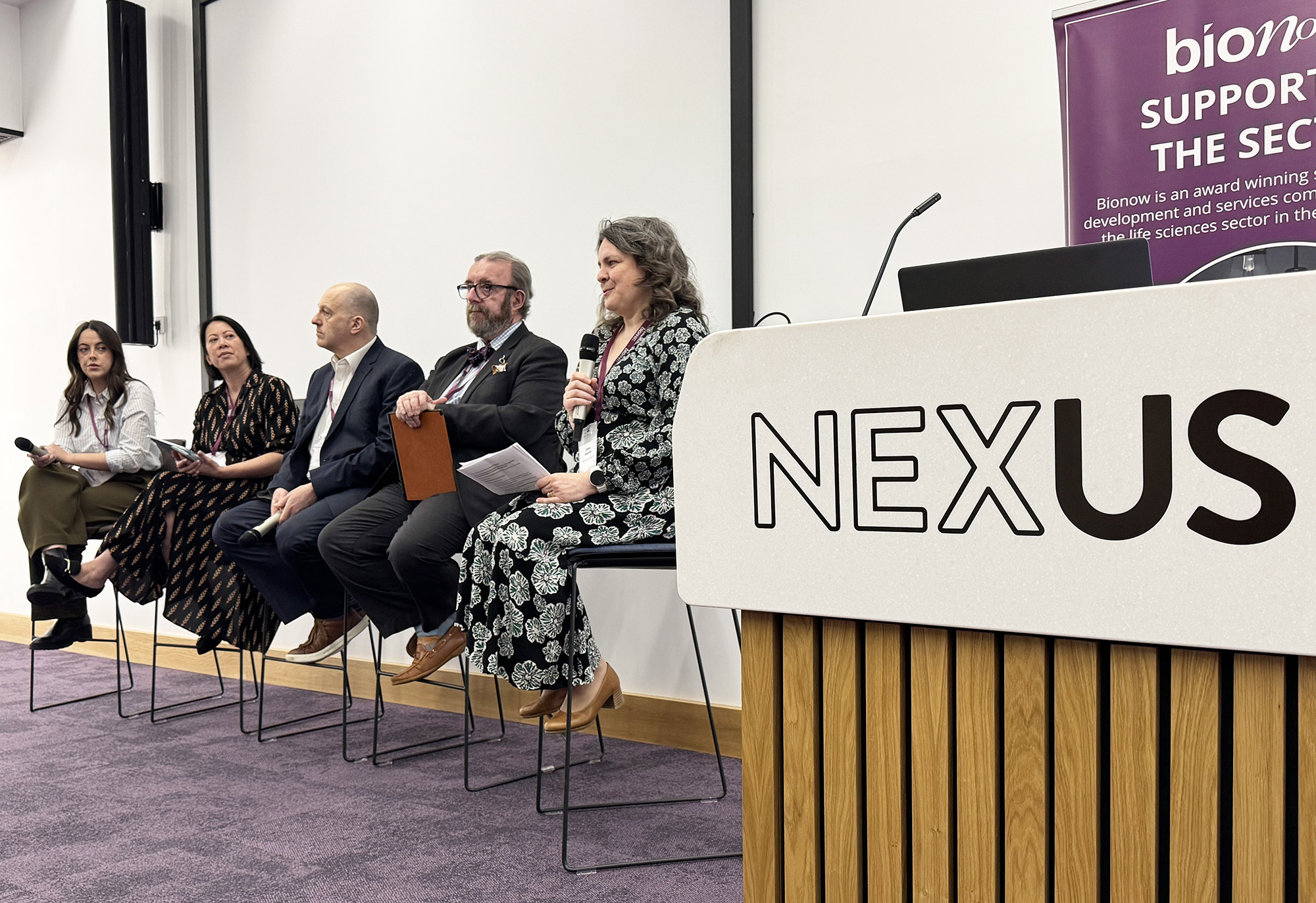
The Bionow Precision Medicine Conference was in Leeds for 2026, hosted by Nexus at the University of Leeds with around 120 delegates, exhibitors and speakers coming together to explore advancements in personalised treatment approaches and their impact on patients.
The conference agenda included a state of the nation panel, followed by discussion topics covering precision oncology; detection and diagnosis; data and AI in precision medicine; a Patient Perspective presentation by the Sickle Cell Society; and advanced therapies, including cell and gene therapies. The event concluded with a tour of the Faculty of Biological Sciences suite of research facilities.
Two keynote speakers shared their expertise: QuantuMDx CEO Jonathan O'Halloran and Elton Zeqiraj, Wellcome Trust Senior Fellow and Professor of Structural Biology at the University of Leeds.
Kicking off the agenda, Jonathan O’Halloran presented “Real-World Examples of Precision
Medicine: Past, Present and the Exciting Future”, showing that precision medicine is no longer just about matching a drug to a genetic marker. As the keynote made clear, it is becoming a much broader, more practical “decision architecture” focused on getting the right intervention to the right patient at the right time. While early breakthroughs in oncology showed what is possible, the field is now moving into real-world settings where diagnostics, data quality and clinical workflows are just as important as the science itself. Tools like pharmacogenomics and advanced diagnostics are helping reduce uncertainty in treatment decisions, but their real impact depends on how well they are integrated into everyday healthcare.
What came through strongly is the pace of innovation now feeding into this space. A wave of new technologies, accelerated by pandemic-era investment, is opening up new possibilities from rapid multiplex testing at the point of care to AI tools that support earlier diagnosis and track disease over time. Simultaneously, some of the biggest gains may come from fixing the basics. Improvements in areas like sample preparation and workflow could significantly reduce failed tests, delays and costs, making precision approaches more accessible at scale. Alongside this, there is a clear focus on building the right environment for innovation to thrive, with incubators and regional clusters playing a key role in supporting the next generation of companies and translating new ideas into real patient benefit.
Sharing his insights, Elton Zeqiraj’s presentation, “Rewiring the Ubiquitin Code: A New Frontier in Precision Medicine”, highlighted how his team of researchers have developed a breakthrough method for treating chronic inflammatory diseases by "rewiring" the way our cells communicate. Our bodies use a protein called ubiquitin as a molecular code to manage everything from immune responses to protein disposal. When this signalling system malfunctions, it can lead to persistent inflammation and autoimmune conditions like Scleroderma. To address this, the team created a new class of "molecular glues" that can selectively shut down an overactive enzyme complex called BRISC, which is responsible for driving harmful interferon signalling. This precise targeting allows the therapy to dampen the excessive immune response in patient cells without completely disabling the body's natural defences.
Beyond these molecular glues, the team is using AI to design entirely new "mini-proteins" from scratch, which act as highly specific "readers" that can identify and latch onto particular types of ubiquitin chains with incredible accuracy. By combining these structural biology techniques with AI, researchers can now distinguish between very similar cellular signals that were previously impossible to target individually. This dual approach (using glues to inhibit specific complexes and AI-designed proteins to read the cellular code) represents a major step forward in precision medicine, offering the potential for highly selective treatments for a wide range of currently "undruggable" diseases.
Commenting on the success of the event, Geoff Davison, CEO of Bionow, said: “It was a fantastic day in Leeds, bringing the precision medicine community together. There was real insight into how innovation is translating into more targeted patient outcomes, alongside honest conversations about the challenges still to address. That openness, and the appetite to collaborate we saw throughout the conference, is exactly what we aim to create with these events.”
The 2026 Precision Medicine Conference was sponsored by Nexus.